| Size | 1200mg/3ml, 1200mg/3ml Refillable System, Special Kit, 200mg/2ml, 500mg/3ml |
|---|
Uncategorized
NAD+ (Nicotinamide Adenine Dinucleotide) | Pen
Price range: $169.00 through $329.00
A Stabilized NAD+ Delivery System for Cellular Energy, DNA Repair, and Longevity Research..
What is NAD+ Pen?
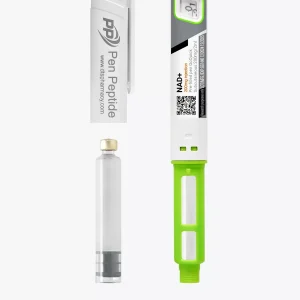
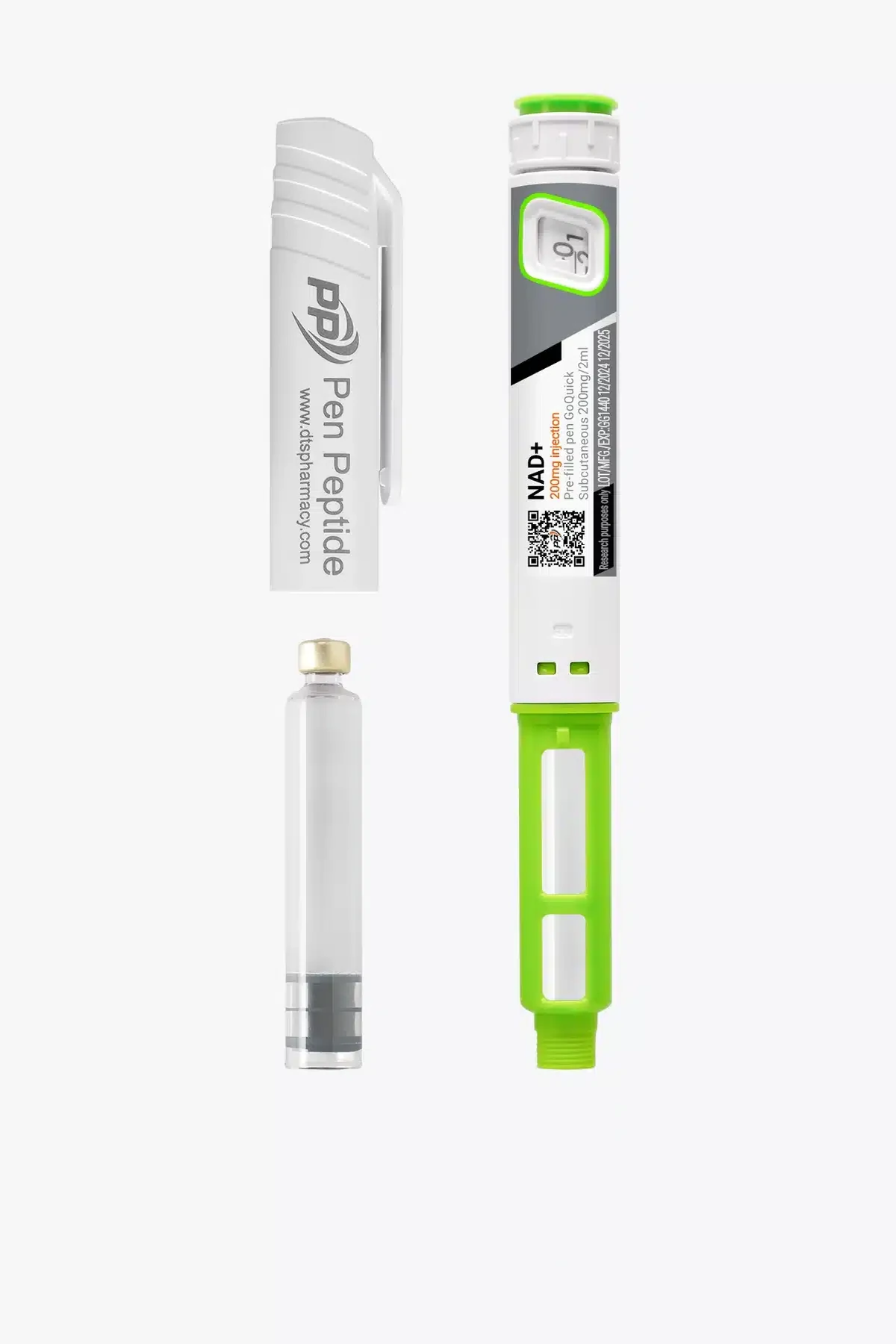
NAD+ Pen is a high-purity, stabilized formulation containing Nicotinamide Adenine Dinucleotide (NAD+), designed for investigational use in experimental models exploring mitochondrial function, energy metabolism, and cellular aging. The formula is available in three concentrations—200mg/2ml, 500mg/3ml, and 1200mg/3ml—each pre-dosed into standardized units for precise and consistent application in systemic research protocols.
NAD+ is a central coenzyme present in every living cell, essential for over 500 enzymatic reactions including ATP production, DNA repair, and activation of Sirtuin enzymes. The NAD+ Pen enables targeted and reproducible delivery of this molecule, optimized for research into metabolic stress, age-related dysfunction, and cellular resilience.
What Makes NAD+ Pen Unique?
NAD+ plays a critical role in maintaining mitochondrial efficiency, regulating redox balance, and driving cellular repair mechanisms. With aging, NAD+ levels decline, resulting in:
- Decreased energy production
- Slower genomic maintenance and DNA repair
- Elevated oxidative stress
- Mitochondrial dysfunction
- Reduced SIRT1 and PARP activity
By providing stabilized, bioavailable NAD+ in a controlled format, NAD+ Pen enables researchers to study the restoration of NAD+-dependent pathways and their implications in longevity, metabolism, neuroprotection, and tissue regeneration.
Primary Mechanisms of Action
Cellular Energy and Mitochondrial Support
NAD+ is indispensable for oxidative phosphorylation and ATP synthesis. Its presence ensures optimal mitochondrial function and supports energy production in high-demand conditions such as aging, metabolic dysregulation, or physical stress.
DNA Repair and Sirtuin Activation
NAD+ is a substrate for PARP and SIRT enzyme families involved in DNA repair, chromatin remodeling, and cellular adaptation to stress. Restoring NAD+ levels enhances genomic maintenance and cellular defense mechanisms.
Neuroprotection and Cognitive Health
Through its role in mitochondrial function and antioxidant defense, NAD+ contributes to neuronal integrity, synaptic activity, and cognitive resilience. It has been studied in models of neurodegeneration and age-related cognitive decline.
Metabolic Regulation
NAD+ influences glucose and lipid metabolism, circadian rhythm alignment, and insulin sensitivity. Research indicates its involvement in improving metabolic flexibility and supporting healthy energy balance.
Research-Supported Applications
NAD+ Pen may be used in experimental protocols exploring:
- Restoration of NAD+ levels and mitochondrial respiration
- Improvement of cellular energy metabolism and endurance
- DNA repair efficiency and cellular damage resistance
- Age-related decline in metabolic and cognitive function
- Redox balance and antioxidant protection in stressed cells
- Neurodegenerative conditions and metabolic syndrome models
Application and Dosing in Research Protocols
Suggested research cycle:
NAD+ 1200mg / 3ml
Total: 300 units
1 unit = 4mg
Dosage: 2 times per day, 10 units each time, every other day
Duration: 30 days, followed by 15–20 days off
NAD+ 500mg / 3ml
Total: 300 units
1 unit = 1.66mg
Dosage: 2 times per day, 24 units each time, every other day
Duration: 30 days, followed by 15–20 days off
NAD+ 200mg / 2ml
Total: 200 units
1 unit = 1mg
Dosage: 2 times per day, 40 units each time, every other day
Duration: 30 days, followed by 15–20 days off
Combination Potential with Other Products
In research settings, NAD+ is often studied in combination with molecules that influence longevity, mitochondrial regulation, or tissue regeneration, including:
- Epitalon – for telomerase activity and genomic stability
- 5-Amino-1MQ – for metabolic regulation through NNMT inhibition
- GHK-Cu (Skin Glow) – for skin remodeling and antioxidant support
These combinations allow the exploration of synergistic effects on cellular homeostasis, regeneration, and anti-aging mechanisms.
Possible Side Effects in Research Context
NAD+ is an endogenously present molecule and is generally well-tolerated in controlled dosages. In some studies, high-dose administration has been associated with mild side effects such as headache, flushing, or gastrointestinal discomfort. These effects are typically transient and dose-dependent.
When used according to protocol guidelines, NAD+ is considered safe for use in research environments.
NAD+ Pen provides a precision platform for investigating mitochondrial biology, cellular repair, and age-related decline. Its stabilized formulation, high bioavailability, and reliable dosing structure make it a valuable compound for researchers exploring energy metabolism, genomic integrity, and biochemical pathways of longevity.