

 Prostamax (Lys-Glu-Asp-Pro) | 20mg/2ml
$79.00
$79.00
Prostamax is a synthetic tetrapeptide formulated to support prostate health and optimize cellular activity within the prostate gland. Composed of lysine, glutamic acid, aspartic acid, and proline, the peptide is designed to assist in regulating tissue growth, managing inflammation, and maintaining hormonal equilibrium.
Its targeted action on prostate cells has made it a focus in men’s health research, particularly in relation to age-associated conditions such as benign prostatic hyperplasia (BPH), chronic prostatitis, and hormone-sensitive tissue imbalances.
Prostamax functions by interacting with biological processes responsible for maintaining the structural and functional integrity of the prostate:
Research efforts surrounding Prostamax have focused on its role in the functional restoration of the prostate and modulation of prostate-related signaling:
Tissue remodeling and fibrosis prevention
Preclinical studies suggest that Prostamax may regulate extracellular matrix composition and fibroblast activity, helping to prevent fibrotic scarring and maintain soft tissue dynamics within the gland.
Antioxidant activity in prostate cells
Prostamax may activate protective cellular pathways that combat oxidative damage, which is often linked to inflammation, DNA damage, and long-term prostate tissue degeneration.
Cytokine balance and immune modulation
It has been shown to influence immune-related molecules, potentially contributing to reduced levels of TNF-α and IL-6—cytokines associated with chronic inflammation and prostate tissue stress.
DHT regulation potential
By supporting enzymatic processes that affect DHT biosynthesis, Prostamax could play a role in reducing hormone-induced prostatic hyperplasia without completely suppressing natural androgen production.
Prostamax (Lys-Glu-Asp-Pro) is a synthetic tetrapeptide composed of four amino acids: Lysine (Lys), Glutamic acid (Glu), Aspartic acid (Asp), and Proline (Pro). Its structure is optimized to interact with specific cellular receptors and biological pathways, enhancing its therapeutic potential.
The tetrapeptide structure of Prostamax ensures a compact and stable peptide chain that provides effective biological activity while resisting enzymatic degradation. The design of Prostamax maximizes the interaction of the peptide with cellular components, allowing it to remain active in the body and exert its therapeutic effects over a prolonged period. This stability is important for its use in long-term treatments for conditions such as inflammation, musculoskeletal recovery, and prostate health.
Due to its small size and efficient composition, Prostamax has high bioavailability, which allows it to penetrate target tissues efficiently. The short peptide chain enhances the peptide’s stability, ensuring that it remains functional within the body for extended periods, which is particularly beneficial for applications related to chronic inflammation, musculoskeletal injuries, and prostate health.
The simple structure of Prostamax ensures that it has low immunogenicity, meaning it is less likely to trigger unwanted immune responses when administered. This reduces the risk of allergic reactions and makes Prostamax suitable for long-term clinical use without significant immune interference. This low immunogenicity enhances Prostamax’s safety profile, making it an attractive option for prolonged treatments in immune system regulation and tissue repair.
Prostamax was developed in response to the growing need for peptide-based interventions in male reproductive and urological health. Drawing on insights from peptide bioregulation, its formulation was intended to offer a supportive, non-hormonal approach to prostate care.
The development process focused on optimizing cellular signaling and minimizing chronic inflammation—both key contributors to age-related prostate dysfunction. Today, Prostamax is under continued evaluation in preclinical and clinical settings for its role in preserving prostate function, particularly in aging men.
Prostamax (Lys-Glu-Asp-Pro) is a synthetic tetrapeptide designed to support prostate health, regulate hormonal balance, and manage prostate-related issues. Its unique combination of amino acids—lysine (Lys), glutamic acid (Glu), aspartic acid (Asp), and proline (Pro)—makes it particularly effective in modulating prostate cell activity, reducing inflammation, and supporting normal prostate function.
Prostamax (Lys-Glu-Asp-Pro) has shown promising potential for improving prostate health, reducing inflammation, and supporting urinary and sexual function. However, like all bioactive peptides, there may be potential side effects, which are generally mild and transient. These effects may vary based on the individual’s health condition, dosage, and response to the peptide.
The side effects of Prostamax are generally mild, short-term, and dose-dependent. Most users tolerate the peptide well, but it is important to monitor any uncommon reactions or persistent symptoms.
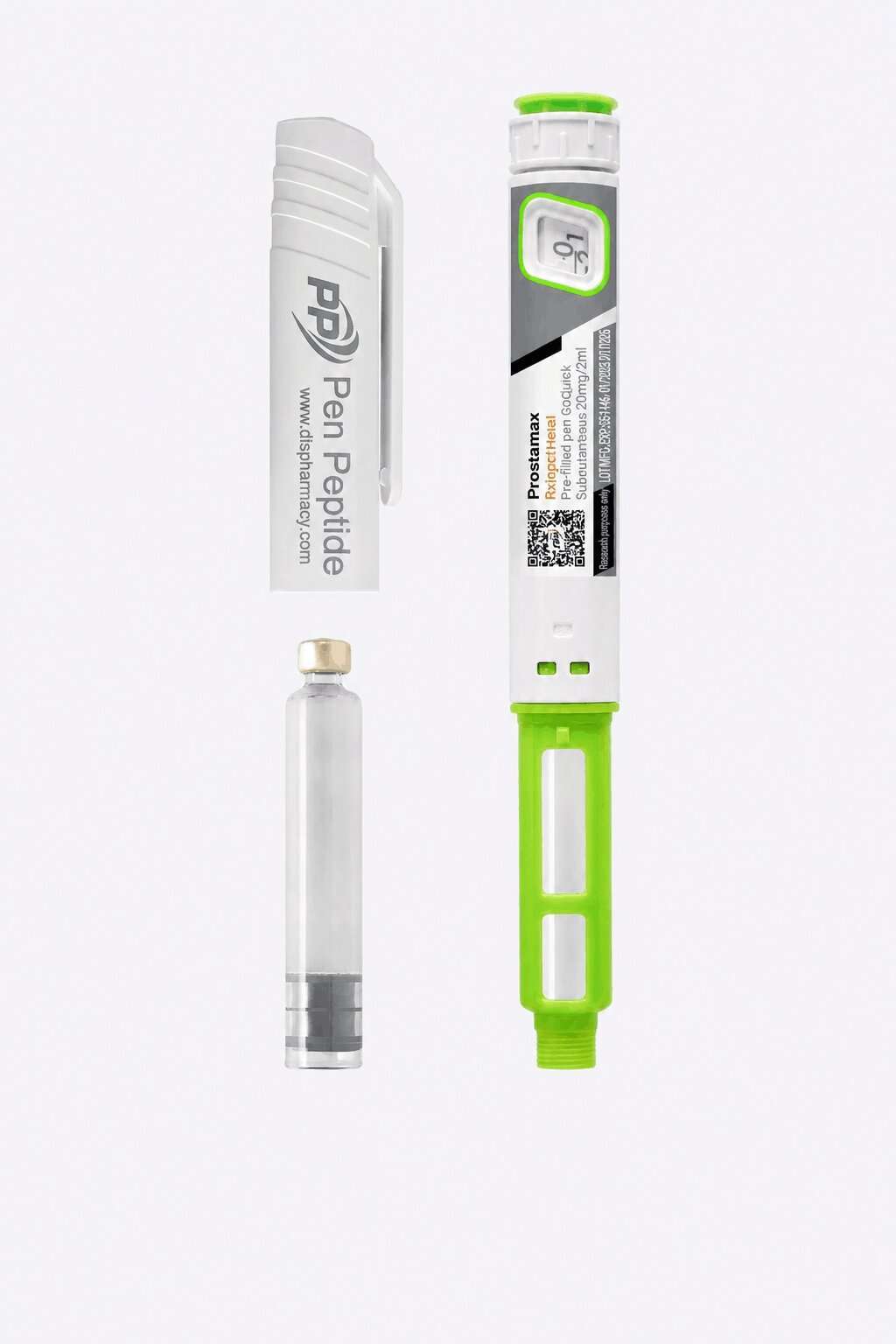
A 20 mg Prostamax pen contains 200 units, with each unit equivalent to 100 micrograms. Example dosing scheme:
These parameters allow for precise dosing and flexibility in research applications.
Prostamax (Lys-Glu-Asp-Pro) | 20mg/2ml