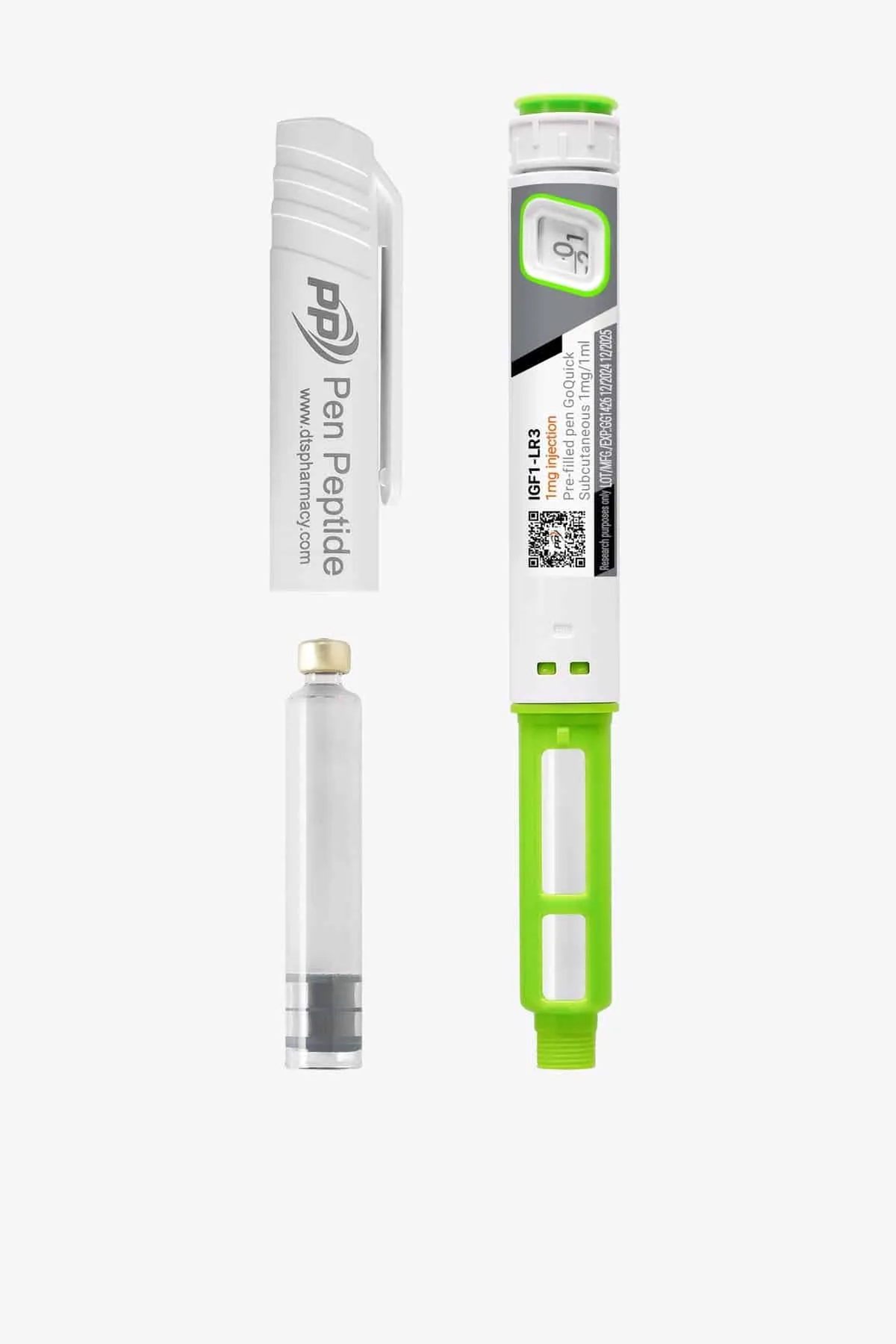
What is IGF 1LR3?
IGF1 LR3 (Insulin-like Growth Factor-1 Long R3), also referred to as igf1lr3 or igf 1lr3, is a synthetic analog of IGF-1, a naturally occurring growth factor integral to cell growth, muscle development, and metabolic regulation. The “Long R3” (LR3) modification replaces the third amino acid (glutamic acid) with arginine, extending the peptide’s structure and reducing its affinity for IGF-binding proteins (IGFBPs). As a result, IGF-1 LR3 remains active in the bloodstream for a longer period, exhibiting enhanced potency compared to native IGF-1.
Unlike insulin, IGF-1 LR3 does not typically induce dramatic fluctuations in blood sugar levels. Instead, it is investigated for its capacity to support nutrient absorption, cellular regeneration, and muscle maintenance, making it a focal point in sports science, regenerative medicine, and longevity research.
How Does IGF1 LR3 Work?
IGF1 LR3 exerts its biological effects by binding to IGF-1 receptors on target tissues, initiating a cascade of growth-related signaling pathways. One key mechanism involves activating the PI3K-Akt-mTOR axis, which is crucial for protein synthesis and muscle hypertrophy. By reducing its binding to IGFBPs, IGF1 LR3 (sometimes referred to as the igf 1 lr3 peptide) achieves a prolonged half-life and increased bioavailability.
- Extended Half-Life and Increased Bioavailability: The modified amino acid sequence of IGF1 LR3 minimizes interactions with IGFBPs, allowing the molecule to circulate longer and exert sustained anabolic effects.
- Muscle Growth and Hypertrophy: Through mTOR pathway activation, IGF1 LR3 facilitates muscle repair and new muscle fiber development, positioning it as a prominent subject in igf 1 lr3 bodybuilding research.
- Enhanced Tissue Repair: By promoting cellular proliferation and differentiation, IGF 1 LR3 supports the regeneration of muscle, tendon, ligament, and bone tissues, an area of significant interest in rehabilitation science.
- Optimized Nutrient Uptake: Studies suggest IGF1 LR3 aids glucose and amino acid transport into muscle cells, potentially improving lean mass maintenance and overall metabolic function.
- Neuroprotective Potential: Preliminary findings indicate a role for IGF-1 in neurogenesis and synaptic plasticity, sparking interest in the neuroprotective capabilities of IGF-1 LR3.
Research on IGF1 LR3
Ongoing research into IGF-1 LR3 highlights its anabolic, regenerative, and metabolic properties:
- Muscle Growth Studies: Data show that IGF1 LR3 supports the development of lean muscle mass and may accelerate recovery from muscular injuries.
- Tissue Regeneration and Wound Healing: By encouraging cell proliferation and differentiation, IGF-1 LR3 has been studied for improving tendon strength, wound healing rates, and bone density.
- Fat Metabolism and Insulin Sensitivity: Research suggests IGF1 LR3 can influence glucose uptake, nutrient partitioning, and possibly enhance insulin sensitivity, making it a peptide of interest in metabolic and obesity-related studies.
- Neuroprotection: Emerging evidence indicates that optimal levels of IGF-1 can aid cognitive function and neuronal health, prompting further exploration of IGF-1 LR3 in neurodegenerative disease research.
- Longevity and Anti-Aging: IGF-1 is recognized for its role in tissue maintenance and cellular repair, leading scientists to investigate IGF1 LR3 for potential benefits in age-related muscle loss and general healthspan extension.
IGF-1LR3 – Structural and Molecular Properties
IGF1 LR3 is a polypeptide consisting of approximately 83 amino acids, derived from modifications to the native 70-amino acid IGF-1 sequence. Its most notable structural changes include:
- Arginine Substitution: Replacing the third amino acid with arginine (Long R3) reduces binding to IGFBPs, prolonging the peptide’s circulation time.
- Extended Amino Acid Chain: Additional amino acids contribute to structural stability and enhance receptor affinity.
- High Receptor Affinity: This synthetic analog displays an increased capacity to bind to IGF-1 receptors while retaining selectivity, thus amplifying its anabolic and regenerative signaling.
These molecular attributes explain why many researchers and laboratories interested in igf 1 lr3 for sale seek this modified form for experimental and investigative purposes.
History and Development of IGF1 LR3
IGF-1 LR3 emerged from scientific efforts to optimize the therapeutic potential of naturally occurring IGF-1. Researchers aimed to address IGF-1’s short half-life by modifying its structure to reduce binding to IGFBPs and enhance receptor interaction. Since its development, IGF1 LR3 has been widely studied in fields such as tissue engineering, igf 1 lr3 bodybuilding research, and gerontology. Ongoing investigations explore how this long-acting growth factor might advance treatments for muscle-wasting diseases, metabolic disorders, and neurodegenerative conditions.
Benefits and Potential Applications of IGF1 LR3
- Muscle Growth and Hypertrophy: By activating the PI3K-Akt-mTOR pathway, IGF-1 LR3 can stimulate protein synthesis and enhance muscle fiber hypertrophy.
- Tissue Regeneration: Its ability to boost cellular proliferation makes IGF-1 LR3 a candidate for accelerating wound healing and fortifying musculoskeletal tissues.
- Fat Metabolism: Research indicates improved glucose and amino acid uptake, suggesting potential utility in body composition optimization and metabolic regulation.
- Neuroprotective Effects: Preliminary studies imply a supportive role in neuron growth and cognitive function.
- Longevity Research: Given IGF-1’s essential role in cellular repair, IGF-1 LR3 is of interest for interventions targeting age-associated muscle decline, immunity, and overall healthspan.
These findings underscore why igf 1 lr3 peptide remains a prominent subject across various domains, from sports medicine to regenerative therapy.
Possible Side Effects of IGF-1 LR3
While IGF-1 LR3 is generally well tolerated in research settings, certain mild and transient side effects have been noted:
- Hypoglycemia: Enhanced glucose uptake can occasionally lower blood sugar levels, causing symptoms like dizziness and fatigue.
- Water Retention: Mild edema, particularly in the extremities, may occur due to increased cellular growth and fluid retention.
- Joint Discomfort: Heightened collagen synthesis could contribute to temporary joint stiffness in some experimental models.
- Potential Tissue Growth: Prolonged exposure to high levels of growth factors can theoretically lead to undesired tissue expansion, though conclusive data are limited.
- Insulin Sensitivity Shifts: IGF-1 LR3 may temporarily affect insulin sensitivity, warranting careful metabolic monitoring in long-term studies.
- Nerve Sensitivity: Some subjects report tingling or sensitivity associated with nerve regeneration processes.
Although these effects are typically moderate and short-lived, they highlight the necessity for continued research to fully understand the long-term safety and metabolic implications of IGF-1 LR3.
IGF-1LR3 | Pre-Mixed Pen – Unit and Microgram (mcg), Milligram (mg) Analysis
A 1mg IGF-1LR3 pen contains 100 units, with each unit equivalent to 10 micrograms. Example dosing scheme:
- 1 unit = 10mcg
- 4 units = 40mcg
- 5 units = 50mcg
- 6 units = 60mcg
- 10 units = 100mcg
These parameters allow for precise dosing and flexibility in research applications.

 IGF-1LR3 | 1mg