
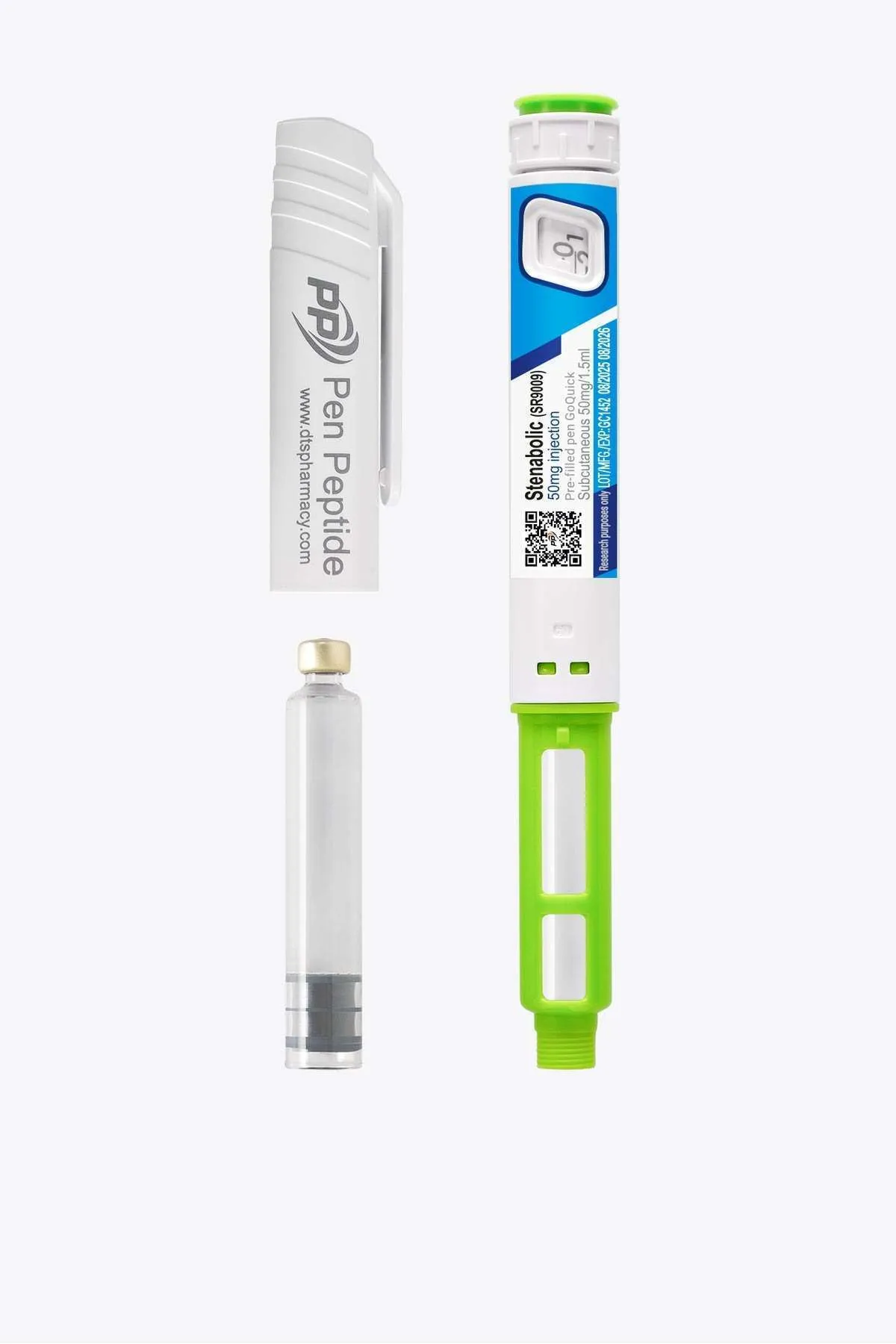
 Stenabolic (SR9009) | 50mg/1,5ml
$119.00
$119.00
Stenabolic, also known as SR 9009, is a synthetic compound developed to modulate the activity of the nuclear receptors REV-ERBα and REV-ERBβ. It does not belong to SARMs, although it is often mentioned in a similar context, and represents a unique REV-ERB agonist—a class of regulators involved in control of circadian rhythm, energy metabolism, and inflammatory response. SR9009 was created to study molecular mechanisms related to mitochondrial function, lipid homeostasis, and skeletal muscle adaptations under load.
Stenabolic acts through activation of REV-ERBα—a receptor that regulates the transcription of genes responsible for mitochondrial production, utilization of energy substrates, and circadian rhythms. Through this modulation SR9009 enhances the oxidative capacity of cells, lowers lipid synthesis, and suppresses inflammatory processes at the molecular level. This leads to improved metabolic efficiency, control of glucose turnover, and increased endurance in muscle tissue. Thanks to its selective mechanism, SR9009 is regarded as a molecule with high potential for research in metabolism and chronobiology.
These effects highlight the role of SR9009 as a research tool in the study of chronic metabolic states, energy adaptation, and molecular physiology.
Stenabolic (SR9009) is often classified alongside SARMs, although technically it is not a SARM, but a REV-ERBα nuclear receptor agonist associated with regulation of circadian rhythms, metabolism, and mitochondrial activity. Despite this difference, SR9009 is compared with other SARMs such as Cardarine (GW501516), Ostarine (MK2866), and Ligandrol (LGD-4033) due to its similar role in research on physical endurance, lipid control, and recovery.
Compared with Cardarine (GW501516), both compounds influence metabolic efficiency and fat oxidation. Cardarine activates PPAR-δ receptors, while SR9009 binds to REV-ERBα, but both molecules promote the use of fats as an energy source. Unlike Cardarine, however, Stenabolic shows a stronger effect on circadian regulation, which makes it unique in research focused on the rhythm of metabolism and sleep.
Compared with Ostarine, SR9009 does not demonstrate an anabolic effect on muscle mass, but supports mitochondrial density and energy efficiency in muscle tissue. While Ostarine targets maintenance and building of muscles, Stenabolic works on improving physical endurance and metabolic adaptation under stress and load.
Compared with Ligandrol, which has pronounced anabolic action, SR9009 serves as a metabolic modulator rather than a growth stimulator. This positions it as a suitable product in research protocols that do not seek muscle hypertrophy, but energy optimization, fat reduction, and improved aerobic capacity.
Stenabolic occupies a special place among SARM-like compounds—not through direct androgen activation, but through regulation of the internal biological rhythm, lipid metabolism, and mitochondrial activity.
Recommended research scheme: 7 units once daily, in the course of 4–6 weeks, followed by 2–4 weeks off period.
1 unit = 33.33mcg.
Total amount in the pen: 150 units
Available scientific data indicate that SR9009 has a complex metabolic profile, therefore it should be applied with caution. Adverse reactions observed during research include:
Adhering to optimal dosage and controlling the duration of application play a key role in limiting the manifestation of side effects.
For research use only. Not for human consumption.
Stenabolic (SR9009) | 50mg/1,5ml