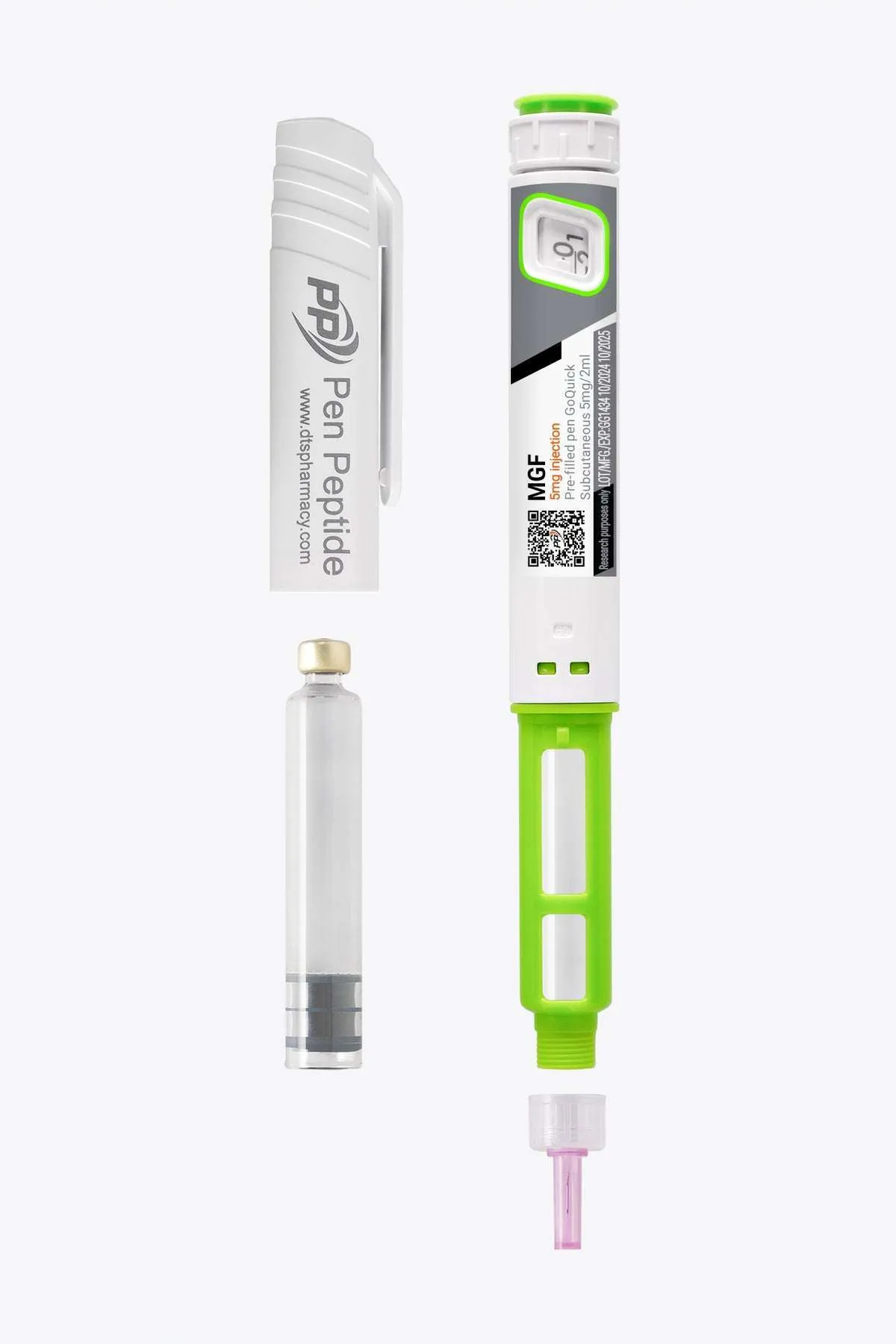
What is MGF Peptide?
MGF Peptide (Mechano Growth Factor) is a splice variant of Insulin-like Growth Factor-1 (IGF-1) that plays a critical role in muscle repair, growth, and regeneration. Unlike systemic IGF-1, which circulates throughout the body, MGF acts locally in response to mechanical stress or injury—such as resistance training, muscle trauma, or rehabilitation exercises. By activating muscle stem cells (satellite cells), MGF peptide initiates tissue repair and stimulates muscle hypertrophy, making it highly relevant in sports science, injury recovery, and muscle-wasting disease research.
How Does MGF Peptide Work?
- Activation of Muscle Stem Cells (Satellite Cells)
When muscle fibers experience microtrauma from exercise or physical strain, MGF peptide signals satellite cells to proliferate and fuse with existing muscle fibers. This process accelerates tissue regeneration and contributes to muscle growth and recovery.
- Localized Muscle Growth and Hypertrophy
MGF exerts its effects within the specific muscle group under mechanical stress, enhancing protein synthesis and supporting muscle hypertrophy. This localized action sets it apart from systemic IGF-1, offering targeted benefits for individuals involved in resistance training or mgf peptide bodybuilding applications.
- Reduction of Muscle Atrophy
By stimulating anabolic pathways and suppressing catabolic signals, MGF peptide helps counteract muscle breakdown. This property is particularly beneficial in conditions of disuse, aging (sarcopenia), or neuromuscular disorders, where muscle mass is at risk.
- Enhanced Recovery and Rehabilitation
Research indicates that MGF facilitates faster tissue healing by promoting cellular repair, increasing local blood flow, and reducing inflammation. These attributes make it a promising candidate for post-injury recovery, post-surgical rehabilitation, and long-term muscle health.
Research on MGF Peptide
Muscle Regeneration and Satellite Cell Activation: Studies show MGF peptide upregulation after mechanical overload, underscoring its significance in stimulating satellite cells to repair damaged muscle fibers.
Muscle Hypertrophy and Strength: Research in animal models demonstrates that elevated MGF levels correlate with increased muscle mass and strength gains, reinforcing its potential in targeted muscle-building therapies.
Prevention of Muscle Wasting: Investigations into MGF highlight its capacity to counteract catabolic processes, reducing the rate of muscle loss in aging populations and in those with neuromuscular diseases.
Injury and Post-Surgical Recovery: By enhancing cellular repair and diminishing inflammatory responses, MGF peptide shows promise in expediting recovery from musculoskeletal injuries, surgeries, and trauma.
MGF Peptide – Structural and Molecular Properties
MGF peptide differs from standard IGF-1 primarily through its distinctive E-domain sequence. This variant arises from alternative splicing of the IGF-1 gene, resulting in an isoform that:
- Acts Locally: MGF primarily exerts its effects within specific muscle regions, rather than systemic circulation.
- Supports Rapid Activation: The unique E-domain facilitates a swift response to mechanical stress, directing regeneration and growth signals to areas in need of repair.
- Short Half-Life: Native MGF is quickly degraded, leading researchers to develop more stable forms (e.g., PEGylated MGF) for extended activity in therapeutic applications.
History and Development of MGF Peptide
First recognized through studies on muscle adaptation to resistance training and injury, MGF was identified as a local growth factor responsible for tissue-specific repair. By the 2020s, researchers had expanded investigations into MGF peptide for treating muscle-wasting diseases and enhancing recovery in sports medicine. Ongoing work explores its long-term safety, optimal dosing, and the potential use in regenerative therapies, especially for patients and athletes interested in advanced muscle rehabilitation strategies.
Benefits and Potential Applications of MGF Peptide
- Muscle Growth and Hypertrophy
MGF peptide activates satellite cells in damaged or stressed muscle fibers, helping to increase muscle size and strength. This targeted mechanism is particularly relevant in mgf peptide bodybuilding protocols, where athletes seek localized muscle development.
- Accelerated Muscle Repair and Recovery
By upregulating anabolic signaling and reducing recovery times, MGF can benefit post-exercise adaptation and promote quicker returns to training following injury or surgery.
- Prevention of Muscle Atrophy
MGF peptide research indicates a protective role against muscle-wasting conditions (e.g., sarcopenia) by encouraging an anabolic environment and minimizing catabolic pathways.
- Sports Medicine and Rehabilitation
MGF is studied for its potential to expedite rehabilitation from muscle tears, tendon injuries, and even complex musculoskeletal damage. It may also offer valuable support to physiotherapists and orthopedic specialists in designing optimized recovery programs.
Possible Side Effects of MGF Peptide
- Injection Site Reactions: Minor redness or swelling at the site of intramuscular or subcutaneous administration can occur but typically subsides quickly.
- Water Retention or Mild Swelling: Some individuals report temporary fluid retention, which often resolves as the body adapts.
- Localized Muscle Soreness: Mild tightness or soreness may arise due to MGF-induced muscle remodeling and growth.
- Risk of Asymmetrical Growth: Site-specific injections could lead to uneven muscle development if administered disproportionately to certain muscle groups.
- Headaches or Fatigue: Rare and generally transient side effects may include mild headaches or feelings of lethargy as the body acclimates to the peptide.
These potential effects are typically dose-dependent and short-lived, with no severe adverse events reported in existing clinical or preclinical data. Nevertheless, ongoing research aims to define optimal administration protocols and ensure long-term safety.
Considering Whether to Buy MGF Peptide
For researchers, medical practitioners, or athletes exploring advanced muscle regeneration strategies, the decision to buy mgf peptide should be informed by clinical data, safety profiles, and individual health considerations. With its local action on muscle tissue and ability to promote recovery, MGF remains a compelling area of investigation in sports science, injury rehabilitation, and the management of muscle-wasting conditions.
MGF Peptide | Pre-Mixed Pen – Unit and Microgram (mcg), Milligram (mg) Analysis
A 5mg MGF Peptide pen contains 200 units, with each unit equivalent to 25 micrograms. Example dosing scheme:
- 1 unit = 25mcg
- 5 units = 125mcg
- 8 units = 200mcg
- 10 units = 250mcg
- 14 units = 350mcg
These parameters allow for precise dosing and flexibility in research applications.
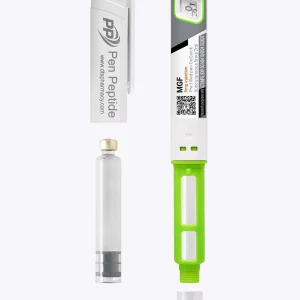 MGF Peptide | 5mg