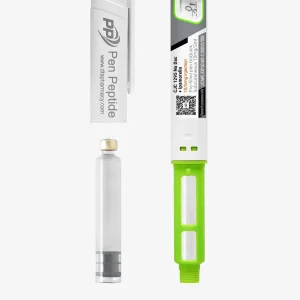
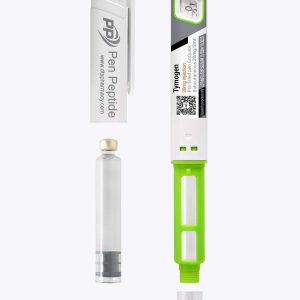
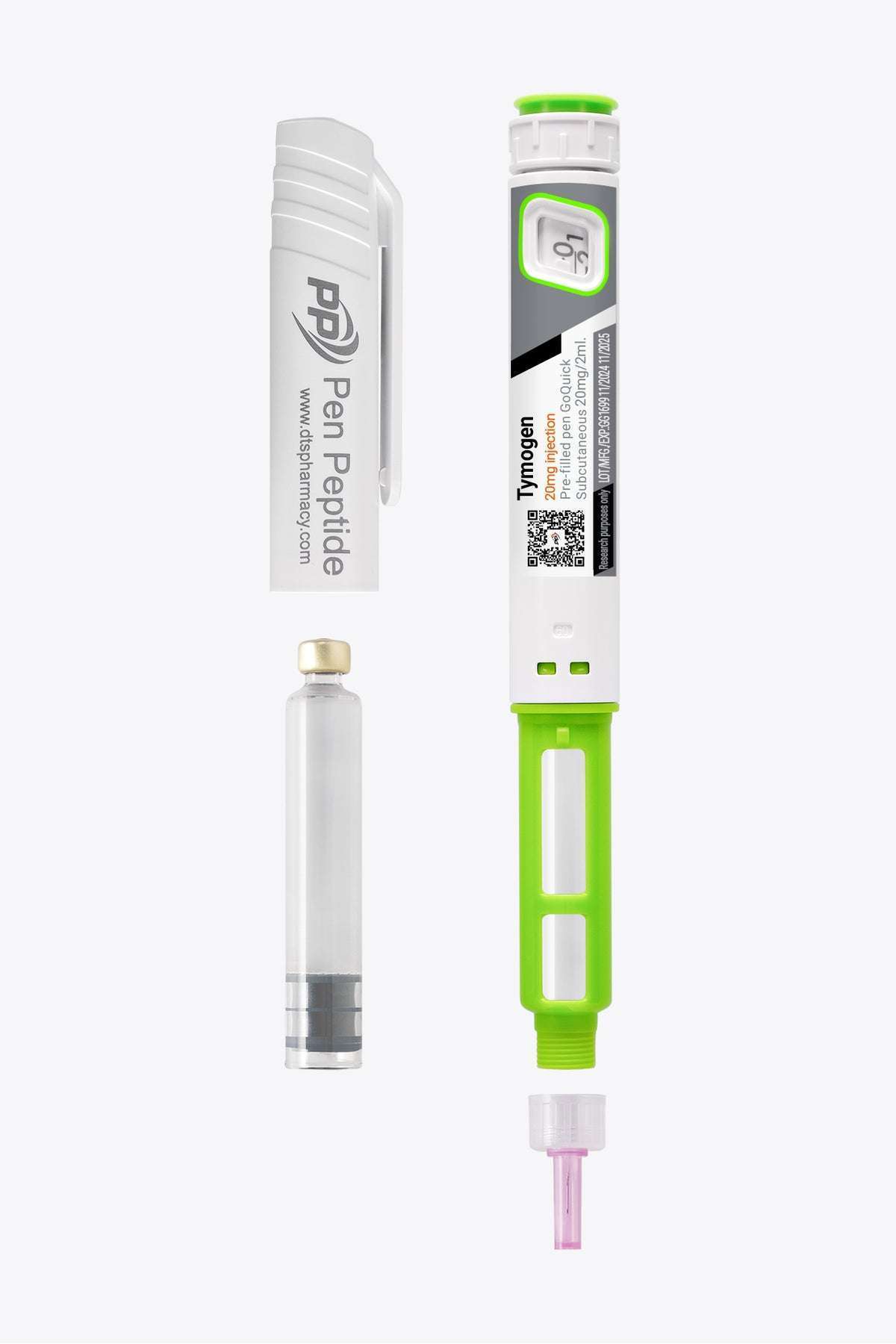
 Tymogen | 20mg/2ml
$79.00
$79.00
Tymogen is a synthetic dipeptide derived from thymopoietin, a natural thymic hormone involved in the development and regulation of the immune system. It has been developed to support immune performance, balance inflammatory responses, and assist tissue repair.
The peptide is particularly relevant in research focused on immune system recovery, chronic inflammation, and defense against infections. Tymogen has attracted attention for its role in stabilizing immune responses, especially in immunocompromised individuals, and may also support post-illness recovery and resilience against future immune stress.
Tymogen influences both arms of the immune system—innate and adaptive—through several biological mechanisms. These actions make it a versatile peptide in the fields of immunology and regenerative medicine.
Scientific investigations into Tymogen highlight its usefulness in modulating immune responses and accelerating healing.
Immune System Revitalization
Tymogen has shown positive effects in improving T-cell responses, especially in individuals recovering from infections, stress, or immunosuppressive treatments such as chemotherapy.
Control of Inflammatory Signals
Research suggests that Tymogen may help normalize cytokine patterns in individuals with dysregulated immune responses, such as those with autoimmune conditions or chronic inflammation.
Pathogen Defense and Recovery
Studies support Tymogen’s role in improving immune detection and neutralization of viruses and bacteria. This could make it suitable for use in post-infection care or in supporting recovery from severe illnesses.
Cellular Repair and Regeneration
By aiding in the repair of damaged tissues, Tymogen may be useful in promoting healing following surgery or trauma, particularly when immune function is involved in the recovery process.
Anti-Aging Immune Research
Tymogen’s role in preserving T-cell function has led to its inclusion in longevity studies aiming to address age-associated immune decline.
Tymogen is a synthetic peptide that has been designed for its immune-modulatory properties, playing a pivotal role in immune system regulation and cytokine modulation. Composed of specific amino acids, Tymogen targets key pathways involved in T-cell activation, immune response regulation, and tissue repair, which makes it useful in immunology and inflammation research.
The peptide chain of Tymogen consists of amino acids carefully selected to enhance bioactivity and stability. Its sequence is specifically designed to ensure that it maintains its activity in biological systems, resists enzymatic degradation, and remains stable over time. This stability allows the peptide to exert its therapeutic effects in a targeted and sustained manner, particularly in the immune system and during cellular regeneration processes.
The main biological action of Tymogen occurs through its ability to modulate immune pathways, especially in the regulation of T-cell activation and cytokine production. The peptide can enhance T-cell maturation and differentiation, especially the CD4+ helper T-cells and CD8+ cytotoxic T-cells, which are essential for immune surveillance and pathogen defense. The activation of immune cells through Tymogen plays a crucial role in immune resistance and pathogen elimination.
Due to its short peptide chain and optimal sequence, Tymogen is designed to have high bioavailability, ensuring that it is easily absorbed by tissues and can effectively reach targeted sites in the immune system. The peptide’s bioavailability allows for localized action, enabling it to interact directly with immune cells, lymphoid tissues, and inflamed areas, where it can provide immune support and promote tissue healing.
The simple structure and small size of Tymogen contribute to its low immunogenicity, making it less likely to provoke unwanted immune reactions compared to larger proteins or complex molecules. This is a critical feature for therapeutic peptides, ensuring that Tymogen can be used long-term without causing immune tolerance or allergic reactions, making it safe for prolonged use.
Tymogen was developed to mimic the immune-modulating functions of natural thymic peptides, aiming to restore immune balance without suppressing natural defense mechanisms. Its design targets individuals with compromised or aging immune systems, supporting faster recovery and better long-term immune health.
Ongoing clinical and laboratory studies are evaluating Tymogen’s role in immune regulation, chronic inflammation, and recovery after infections or immune-suppressive therapies.
Tymogen’s versatility makes it valuable across a broad range of health concerns:
Tymogen has been studied for its immune-modulating and anti-inflammatory properties, and research indicates that it is generally well tolerated in experimental settings. However, like any peptide, Tymogen may be associated with mild and temporary side effects, depending on dosage, administration method, and individual response.
These side effects are generally mild, transient, and dose-dependent, resolving as the body adjusts to the peptide’s effects. No severe or long-term adverse reactions have been reported in preclinical or clinical studies, but further research is ongoing to evaluate long-term safety, optimal dosing, and potential immune interactions.
A 20 mg Tymogen pen contains 200 units, with each unit equivalent to 100 micrograms. Example dosing scheme:
These parameters allow for precise dosing and flexibility in research applications.
Tymogen | 20mg/2ml